
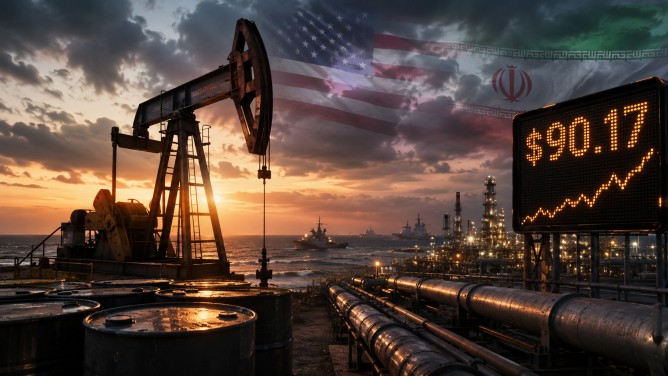
Oil prices experienced a significant surge as the two-month negotiation period between the United States and Iran concluded without reaching a peace agreement. This development has intensified worries that the ongoing conflict could persist, potentially causing further disturbances in global energy supplies. Brent crude prices soared past the $90 mark, hitting approximately $91.63 per barrel, marking the highest level since July 30. This spike followed a stern demand from US President Donald Trump for Iran to surrender, along with a warning that the conflict might escalate if diplomatic solutions fail.
Amid these rising tensions, the strategic Strait of Hormuz has become a focal point of concern. The waterway, vital for global oil shipping, has seen a notable decline in the number of commercial vessels passing through. This reduction has fueled fears of extended disruptions in oil supplies, exacerbating uncertainties around energy security.
Iran has signaled the possibility of adopting a more aggressive military posture if negotiations prove unfruitful. Reports of an attack on a cargo ship navigating the strait have further compounded anxieties regarding the safety and security of maritime operations in the region. Such incidents underscore the fragile nature of shipping routes and their critical role in maintaining stable oil supplies.
In response to these developments, investors are bracing for the likelihood of a prolonged disruption in oil supplies. The potential for a sustained closure or diminished traffic through the Strait of Hormuz poses a significant risk of exerting additional upward pressure on crude oil prices. The strategic importance of this waterway means any protracted disturbance could have far-reaching implications for energy markets.
Analysts caution that the enduring conflict in the Middle East, coupled with the ongoing war in Ukraine, could result in further shocks to global energy markets. These geopolitical tensions threaten to drive oil and gas prices even higher, potentially impacting economies worldwide. The interplay of these factors highlights the complex and interconnected nature of current global energy challenges.