
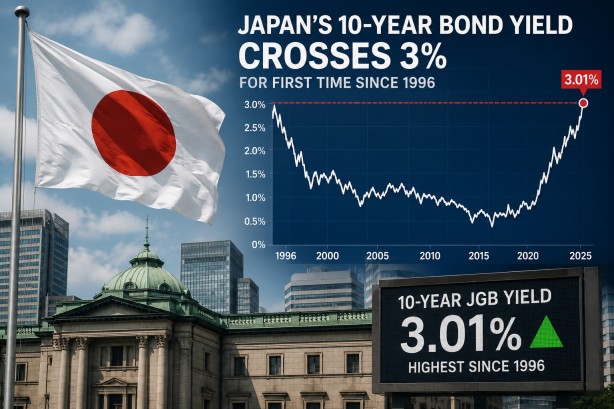
In a notable development for Japan’s financial landscape, the country’s 10-year government bond yield has surpassed 3% for the first time since 1996. This significant uptick in yields marks a pivotal change in Japan’s bond market, enhancing the attractiveness of domestic fixed-income investments. As a result, Japanese investors are beginning to reassess their holdings in overseas bonds, potentially reversing a long-standing trend of capital flow into international debt markets. This year, up until August 22, Japanese investors have already registered a net outflow of ¥3 trillion (approximately $18.7 billion) from foreign debt, according to official statistics.
The competitiveness of Japanese bonds is being bolstered by the increased yields, especially as currency-hedging costs diminish the returns that can be gained from investments abroad. A recent survey of 82 Japanese corporate pension funds revealed the strongest inclination to boost domestic bond allocations since the survey’s inception in 2008. This shift could have significant implications for global financial markets, given that Japanese investors have traditionally been substantial purchasers of U.S. Treasuries and other sovereign bonds. A continued reduction in their international investments might exert upward pressure on global bond yields and borrowing expenses.
This rise in Japanese bond yields is being driven by several factors, including inflation concerns, anticipation of further interest rate hikes by the Bank of Japan, and increasing apprehensions regarding Japan’s fiscal health. However, financial analysts suggest that the current trend is more indicative of a gradual reallocation of assets towards domestic markets rather than an abrupt, large-scale withdrawal from foreign investments.
As Japanese yields climb, domestic bonds are increasingly viewed as a viable option for investors seeking stable returns. The shift underscores a potential reorientation in investment strategies, as the attractiveness of local bonds grows amidst changing economic conditions. While the immediate effects on international markets remain to be fully seen, the move could signal a longer-term transformation in the investment habits of Japanese financial institutions and investors.