
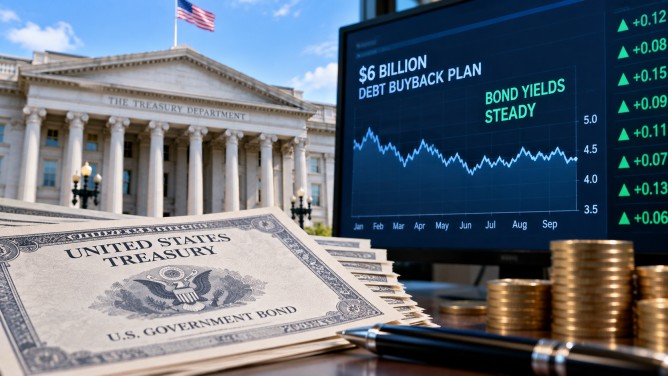
The US bond market is showing resistance to efforts by the Treasury Department to reduce borrowing costs, as evidenced by the continued rise in government bond yields. Despite plans to repurchase $6 billion in US Treasury securities, announced by Treasury Secretary Scott Bessent on Wednesday, the anticipated impact of easing a selloff and lowering interest rates has not materialized. Consequently, the yield on 10-year Treasury bonds has escalated to its highest point in three years, reflecting investor skepticism about the effectiveness of the buyback.
Yields on 30-year Treasuries have similarly surged, reaching approximately 5.2%, a peak not seen since the financial turmoil of 2008. Contributing factors include ongoing inflation concerns and geopolitical tensions, specifically the conflict in Iran, which have heightened the pressure on US government debt. Traditionally considered one of the safest investments, this debt is now under increased scrutiny, with investors wary of the uncertain economic landscape.
In August, Secretary Bessent revealed plans to significantly increase the Treasury’s debt buyback operations, aiming to stabilize the bond market by reducing the available supply of bonds. This strategy was expected to potentially lower yields; however, since the announcement, yields have only continued their upward trajectory. Meanwhile, the US government’s total debt exceeded $40 trillion in August, having doubled over the past decade—an indicator of the broader financial challenges faced by the country.
The rising yields in the Treasury market have implications beyond government borrowing, as they can lead to higher costs for consumers on mortgages, student loans, and auto financing. The current bond market dynamics also complicate the US Federal Reserve’s efforts to manage inflation, which, despite easing to 3.4% in July, remains elevated. This inflation rate, although lower than the three-year high witnessed in May, still surpasses last year’s figures by 0.7 percentage points, with energy prices contributing significantly to ongoing price pressures.
Adding to the economic strain, Brent crude oil prices have climbed above $100 per barrel amid the intensifying Middle Eastern conflict. This situation poses a challenging scenario for the Federal Reserve, which is tasked with balancing inflation control through interest rates with political pressures, notably from President Donald Trump, who has consistently advocated for lower rates.